Writs, Judgments and Court Orders on a PPSR Check: What They Mean
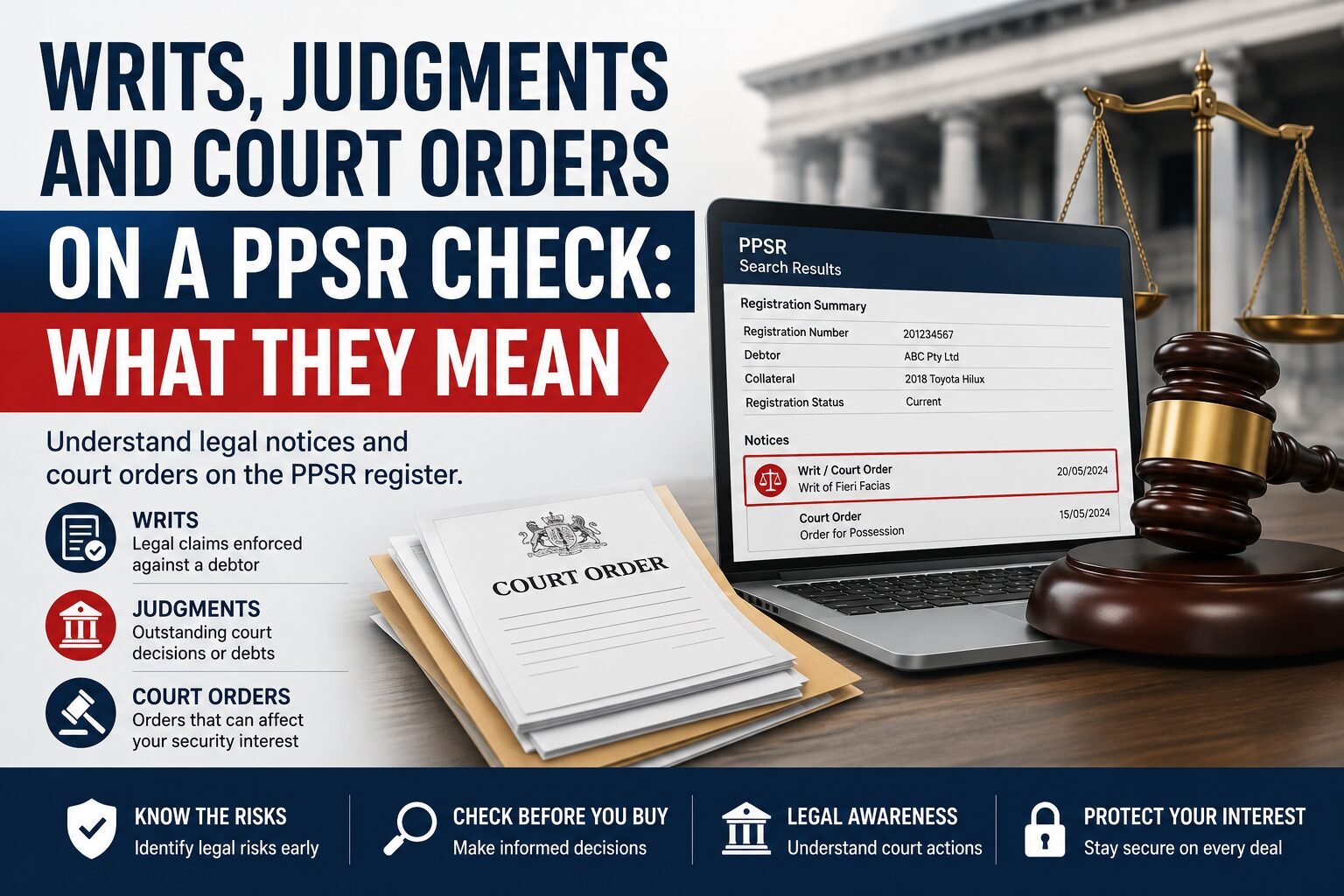
Most PPSR reports show straightforward finance information, but occasionally a report includes a writ, judgment or court order. This can look alarming if you don’t know what it means.
What Is a Writ or Court Order on the PPSR?
A writ is a court-issued order allowing a sheriff or bailiff to seize a debtor’s property, including a vehicle, to satisfy an unpaid judgment debt. When this applies to a specific vehicle, it can be recorded against that vehicle on the PPSR.
Why Writs Appear Against Vehicles
If the current owner has lost a court case and not paid the resulting debt, the winning party can apply for a writ of execution. Vehicles are a common target since they are relatively easy to identify and seize compared to other assets.
What to Do If a Writ Is Registered Against a Car You Want to Buy
- Treat it as a serious warning sign and pause the purchase.
- Ask the seller to clear the writ and provide evidence it has been removed from the PPSR before proceeding.
- Consider seeking legal advice if the seller is unwilling or unable to resolve it.
Writs vs Security Interests: What’s the Difference?
A security interest usually relates to a voluntary finance agreement, such as a car loan, while a writ arises from a court judgment unrelated to the vehicle’s purchase. Both can prevent clean transfer of ownership, so both should be treated with equal caution. See our guide on what a security interest is for more detail on the more common finance-related entries.
Frequently Asked Questions
Can I still buy a car with a writ registered against it?
It is strongly recommended you wait until the writ is cleared, as the vehicle could legally be seized even after you have paid for it.
How common are writs on PPSR reports?
They are far less common than standard finance entries, but they do appear and should never be ignored when found.
Does a PPSR check reveal all court orders against a seller?
It only reveals orders specifically registered against that vehicle, not all legal matters involving the seller personally.
Conclusion
A writ or court order on a PPSR check is rare but serious. Treat it the same way you would treat undischarged finance, and do not proceed with a purchase until it has been resolved.