PPSR Certificate Sample Explained: How to Read and Understand Every Section
If you’ve recently completed a PPSR check, you’ve probably received a PPSR certificate containing several pages of technical information. For first-time buyers, the report can seem confusing because it includes legal terms, registration details, security interests, collateral classes, and other information that isn’t always easy to understand.
Fortunately, you don’t need to be a lawyer or finance expert to interpret a PPSR certificate. Once you know what each section means, you can quickly determine whether a vehicle or other personal property has any registered security interests and whether additional investigation is required before completing your purchase.
This guide explains a PPSR certificate sample in plain English, breaks down every section of the report, and shows you how to identify potential warning signs before buying a used vehicle or valuable personal property.
What Is a PPSR Certificate?
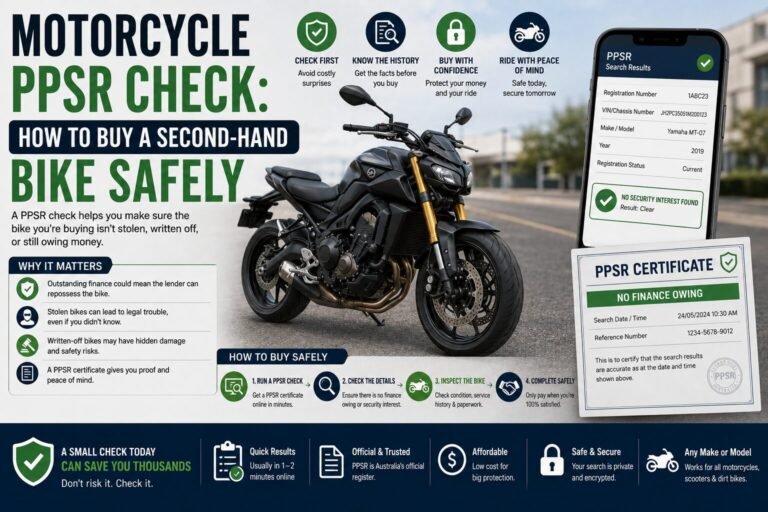
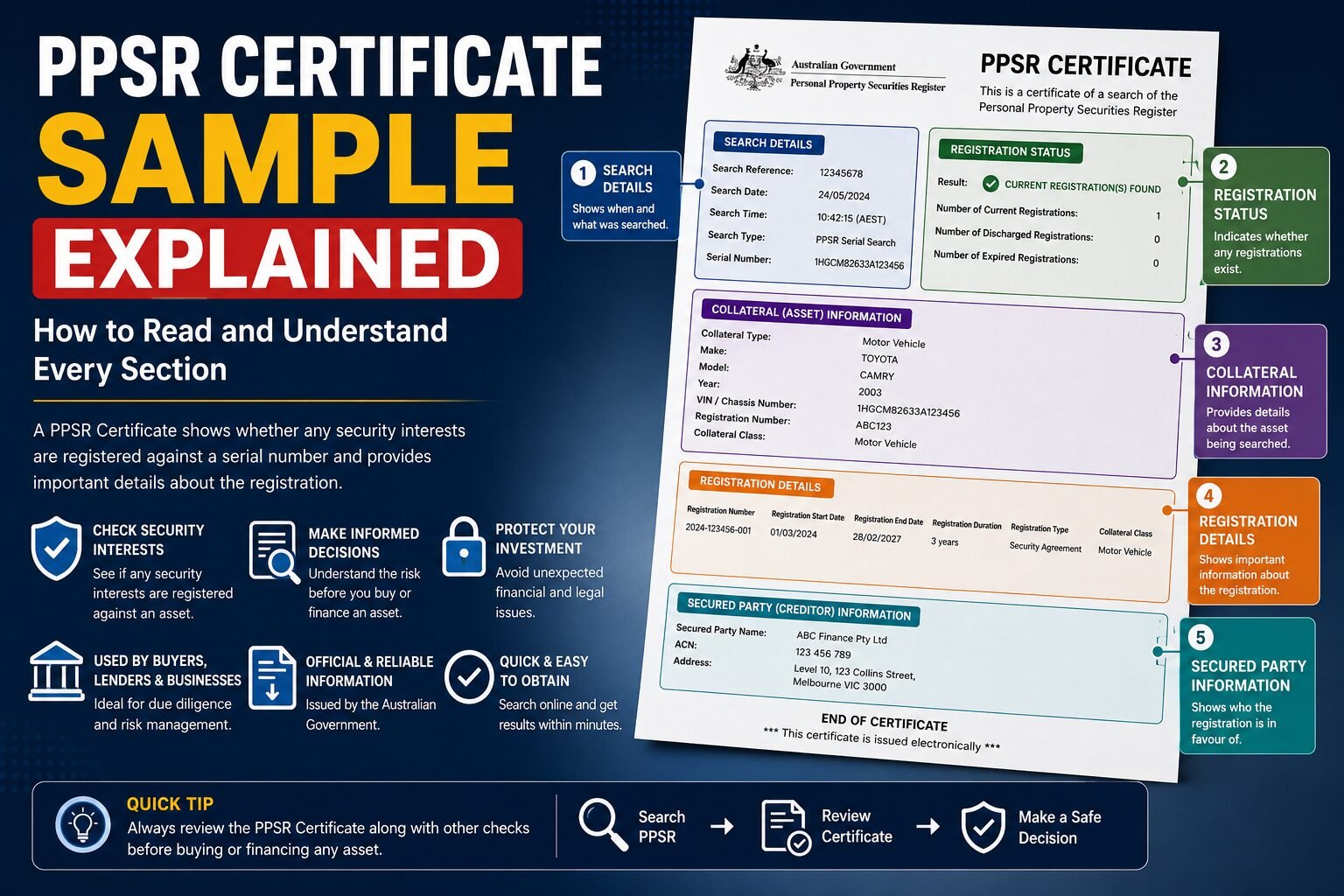
A PPSR certificate is an official record generated after searching Australia’s Personal Property Securities Register (PPSR). It provides a snapshot of the register at the exact date and time the search was completed.
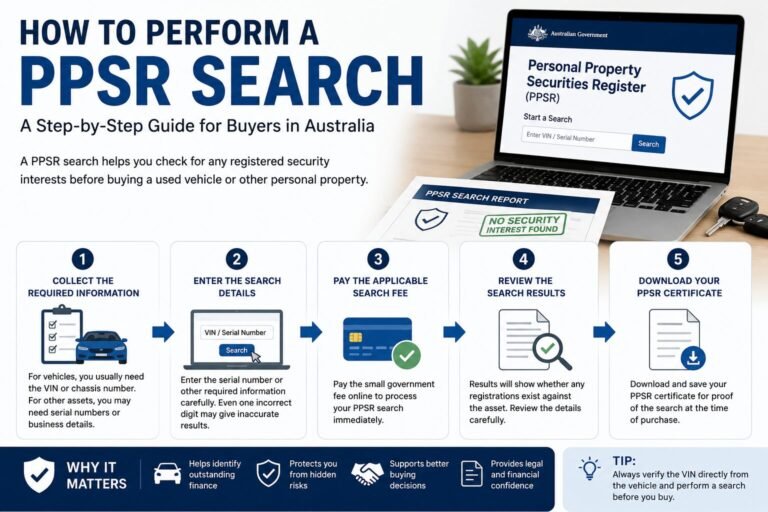
The certificate shows whether there are any current security interests registered against the property you searched. For vehicles, the search is usually completed using the Vehicle Identification Number (VIN).
Many buyers keep a copy of their certificate as part of their purchase records because it documents the results available when the search was performed.
Why Is a PPSR Certificate Important?
A PPSR certificate helps buyers and businesses make informed decisions before purchasing or financing personal property.
It can help you determine whether:
- A vehicle has outstanding finance.
- A lender has registered a security interest.
- Commercial equipment has been used as loan security.
- Further questions should be asked before completing a purchase.
Reviewing the certificate carefully is an important part of due diligence.
Sample PPSR Certificate Layout
Although the exact appearance may vary, most PPSR certificates include the following sections:
| Section | Purpose |
| Search Details | Confirms when and how the search was performed |
| Search Criteria | Shows the VIN or serial number searched |
| Search Outcome | Indicates whether current registrations exist |
| Registration Details | Lists each security interest found |
| Collateral Information | Identifies the property covered |
| Secured Party Details | Identifies the party holding the security interest |
| Certificate Reference | Records the certificate number and search reference |
Each section provides valuable information that should be reviewed before purchasing an asset.
Example PPSR Certificate
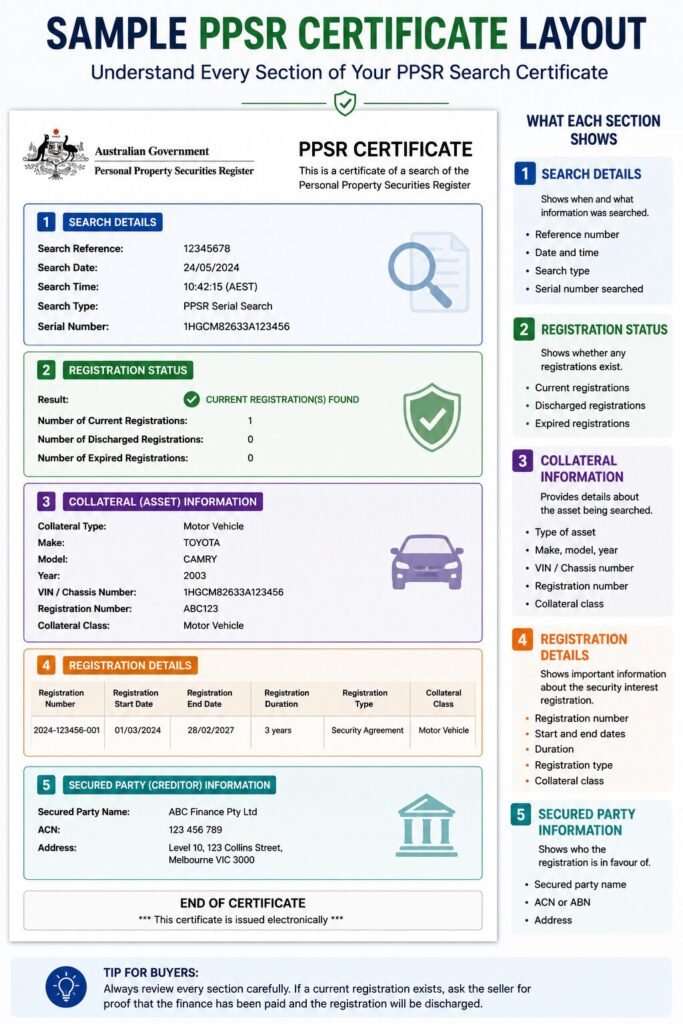
Below is a simplified example of what a PPSR certificate might contain.
| Field | Example |
| Search Date | 18 July 2026 |
| Search Time | 10:25 AM |
| Search Type | VIN Search |
| VIN | JTM12345678901234 |
| Registration Status | Current Registration Found |
| Registration Number | 987654321 |
| Collateral Class | Motor Vehicle |
| Registration Start | 10 March 2024 |
| Registration Expiry | 10 March 2031 |
| Secured Party | ABC Finance Pty Ltd |
Let’s examine what each field means.
Search Date and Time
The search date and time indicate exactly when the PPSR search was performed.
This information is important because the PPSR is a live register. New registrations or discharges can occur after your search, so the certificate only reflects the register at that specific point in time.
If there is a significant delay before completing your purchase, it may be wise to perform another search.
Search Type
The certificate identifies the type of search completed.
Common search types include:
- VIN Search
- Serial Number Search
- Grantor Search
- Organisation Search
For motor vehicles, a VIN search is the most common method.
Vehicle Identification Number (VIN)
The VIN is one of the most important parts of the certificate.
Every modern vehicle has a unique 17-character VIN that identifies it.
Always compare the VIN shown on the certificate with the VIN displayed on:
- Dashboard
- Driver’s door frame
- Registration papers
- Insurance documents
- Compliance plate
If the numbers do not match exactly, investigate before proceeding with the purchase.
Registration Status
The registration status tells you whether any active security interests exist.
Common results include:
No Current Registrations
This means the PPSR did not identify any active security interests against the searched VIN at the time of the search.
This is generally a positive result but should not be considered proof that the vehicle is free from all issues.
Current Registration
This means one or more security interests are currently registered.
A current registration does not automatically mean you should avoid purchasing the vehicle.
Instead, ask the seller:
- Why is the registration still active?
- Has the loan already been repaid?
- Can evidence be provided?
- Will the registration be discharged before settlement?
Discharged Registration
A discharged registration indicates that the security interest has already been removed from the register.
Generally, discharged registrations no longer affect the property.
Expired Registration
Expired registrations have reached the end of their registration period and are no longer active.
Registration Number
Each security interest receives its own registration number.
This unique identifier allows registrations to be referenced if updates, amendments, or discharges occur.
Registration Start Date
This field shows when the security interest was originally registered.
It helps establish how long the registration has existed.
Registration Expiry Date
Every PPSR registration has an expiry date unless registered indefinitely under specific circumstances.
The expiry date indicates when the registration is scheduled to end if it is not renewed.
Registration Duration
This section identifies the period for which the registration remains effective.
Depending on the collateral type, registrations may remain active for several years.
Collateral Class
The collateral class identifies the type of property covered by the registration.
Common collateral classes include:
- Motor Vehicle
- Watercraft
- Aircraft
- Agricultural Machinery
- Commercial Equipment
- Inventory
- Livestock
- Other Goods
Ensure the collateral description matches the asset you’re purchasing.
Secured Party Details
The secured party is the organisation or lender holding the registered security interest.
Examples include:
- Banks
- Credit unions
- Finance companies
- Vehicle leasing companies
- Commercial lenders
- Equipment finance providers
The certificate identifies who has registered the interest over the property.
Security Interest Explained
A security interest is a legal right over personal property that secures payment or another obligation.
Common examples include:
- Car finance
- Business loans
- Equipment leasing
- Hire purchase agreements
- Commercial finance
- Retention of title arrangements
If the borrower fails to meet the agreement, the secured party may have legal rights relating to the asset.
How to Interpret a PPSR Certificate
When reviewing a PPSR certificate, ask yourself the following questions:
Does the VIN match the vehicle?
If not, stop and investigate.
Is there a current registration?
If yes, request additional information from the seller.
Does the collateral class match the property?
The description should accurately reflect the asset you are purchasing.
Is the registration current or discharged?
Current registrations require further investigation.
Discharged registrations generally indicate the security interest has already been removed.
Does anything appear unusual?
If information seems inconsistent or incomplete, seek clarification before proceeding.
What a PPSR Certificate Does Not Tell You
A common misconception is that a PPSR certificate provides a complete vehicle history.
In reality, it generally does not include:
- Vehicle ownership
- Mechanical condition
- Accident history
- Flood damage
- Odometer accuracy
- Registration status
- Insurance claims
- Service records
These items should be checked separately.
Red Flags to Watch For
While reviewing a PPSR certificate, pay close attention to the following:
- VIN does not match the vehicle.
- Multiple current registrations.
- Seller cannot explain an active registration.
- Missing supporting documents.
- Information that appears inconsistent.
If any of these issues arise, ask questions before completing the purchase.
Common Mistakes Buyers Make
Many buyers misunderstand PPSR certificates.
Avoid these common mistakes:
Assuming No Registration Means No Problems
A vehicle may still have mechanical issues or accident damage.
Ignoring Active Registrations
Never overlook a current registration without understanding why it exists.
Not Comparing the VIN
Always verify that the VIN matches the vehicle exactly.
Believing PPSR Confirms Ownership
The PPSR records security interests not ownership.
Ownership should be verified separately.
Best Practices When Using a PPSR Certificate
To make the most of your PPSR search:
- Verify the VIN before searching.
- Review every section of the certificate.
- Save a copy of the report.
- Compare the certificate with the seller’s documents.
- Arrange an independent vehicle inspection.
- Review service history.
- Confirm registration details.
- Ask questions if anything appears unusual.
These steps help reduce risk when purchasing used vehicles or other valuable assets.
Frequently Asked Questions
Is a PPSR certificate proof of ownership?
No. A PPSR certificate records registered security interests but does not establish legal ownership.
Can I rely only on a PPSR certificate before buying a car?
No. A PPSR certificate should be used together with a mechanical inspection, service history, registration checks, and verification of ownership documents.
How long is a PPSR certificate valid?
The certificate reflects the register at the exact time the search was completed. If circumstances change afterward, a new search may be required.
What should I do if my certificate shows a current registration?
Request additional information from the seller and ask for evidence that any outstanding obligations have been resolved or will be resolved before settlement.
Should businesses keep PPSR certificates?
Yes. Businesses often retain PPSR certificates as part of their due diligence records when purchasing equipment, vehicles, or other commercial assets.
Conclusion
A PPSR certificate is much more than a simple search result—it is an important document that helps buyers, businesses, and lenders understand whether a vehicle or other personal property has registered security interests. Learning how to interpret each section of the certificate enables you to make informed purchasing decisions and identify situations that require further investigation.
While a clear PPSR certificate is an encouraging sign, it should always be combined with other due diligence steps such as verifying the VIN, inspecting the asset, reviewing service records, and confirming ownership documentation. Taking a comprehensive approach helps reduce risk and gives you greater confidence when buying valuable personal property in Australia.