Private Seller vs Dealer: Who’s Responsible for Existing Finance on a Used Car?
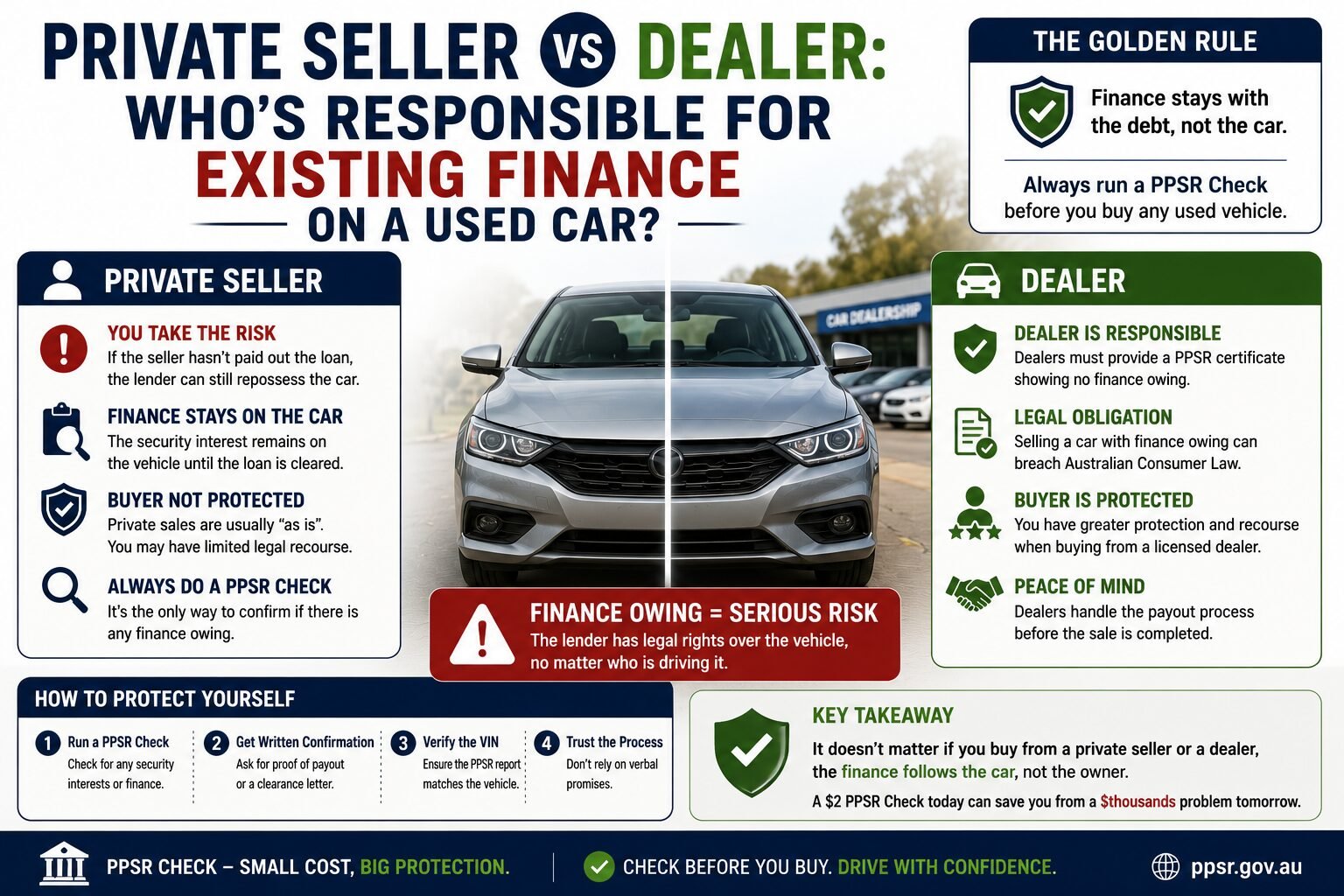
The same finance problem, a security interest still registered against a used car, plays out very differently depending on who you bought it from. A licensed dealer carries legal obligations that a private seller simply doesn’t, and knowing the difference before you buy changes how much scrutiny the sale actually needs.
The Short Answer: Dealers Carry More Legal Responsibility
In most Australian states, licensed motor dealers are required by consumer law to sell vehicles with clear title, meaning any existing finance must be disclosed and cleared before the sale settles. Private sellers carry no equivalent statutory obligation. That imbalance is the entire reason PPSR checks matter more, not less, when you’re buying privately.
Buying from a Licensed Dealer
Dealers operate under state-based fair trading and consumer protection frameworks that generally require them to pass on clear title. If a dealer sells a car with an undisclosed security interest still attached, that’s typically a breach of their obligations, and you have avenues for recourse through consumer affairs or fair trading bodies. This doesn’t mean skipping your own PPSR search, dealer errors do happen, but the legal safety net is considerably stronger.
Buying from a Private Seller
Private sales run on a “buyer beware” basis. There’s no dealership standing behind the transaction, no statutory disclosure obligation, and often no paper trail beyond what the seller chooses to show you. If a private seller has finance owing on the car and doesn’t disclose it, deliberately or otherwise, you may be left negotiating directly with them, or with their lender, to sort it out after the fact. Running your own PPSR search using our homepage checker before you pay is the single most effective way to close that gap.
What Happens If You Buy a Financed Car and the Lender Wants It Back?
Regardless of who you bought from, if a lender’s security interest was still registered at settlement, they may retain rights to the vehicle in certain circumstances. The difference is what happens next: with a dealer, you generally have a clearer legal path to a refund or remedy. With a private seller, recovering your money can mean small claims court, and that process is slower and less certain.
Questions to Ask a Private Seller Before You Pay
- Is there any finance still owing on this vehicle?
- Can you provide the VIN so I can run my own PPSR search?
- If finance shows up, can you get a written discharge letter before settlement?
- Do you have the original purchase and loan paperwork available?
Questions to Ask a Dealer Before You Pay
- Can I see the PPSR certificate you ran for this vehicle?
- Is the title clear, and can you confirm that in writing?
- What’s your dealership’s policy if a title issue surfaces after settlement?
Why the PPSR Check Still Matters Either Way
Legal protections around dealer sales reduce your risk, they don’t eliminate it. A PPSR search costs a small government fee and takes a few minutes, regardless of whether you’re buying from a dealership showroom or a driveway in the suburbs. Treating it as standard practice, not an optional extra reserved for “suspicious” private sales, is what actually protects you.
Frequently Asked Questions
Are dealers legally required to run a PPSR check?
Requirements vary by state, but reputable dealers routinely run these checks as standard practice to protect their own title before resale.
Can I get a refund from a private seller if finance surfaces later?
You can pursue one, but without a dealership’s consumer protections behind the sale, it may require direct negotiation or a small claims process.
Does buying from a dealer mean I never need to check PPSR myself?
No. It’s still worth confirming independently, dealer errors and administrative gaps do happen occasionally.
Is auction buying treated like a dealer sale or a private sale?
It depends on the auction house and its terms of sale, so it’s worth clarifying their title guarantee policy directly before bidding.
Conclusion
Dealers carry more legal weight behind a clear-title sale, but that doesn’t make a PPSR search optional when you’re buying from one, and it makes one essential when you’re buying privately. Either way, a quick search before you pay is the cheapest insurance policy available against inheriting someone else’s debt.