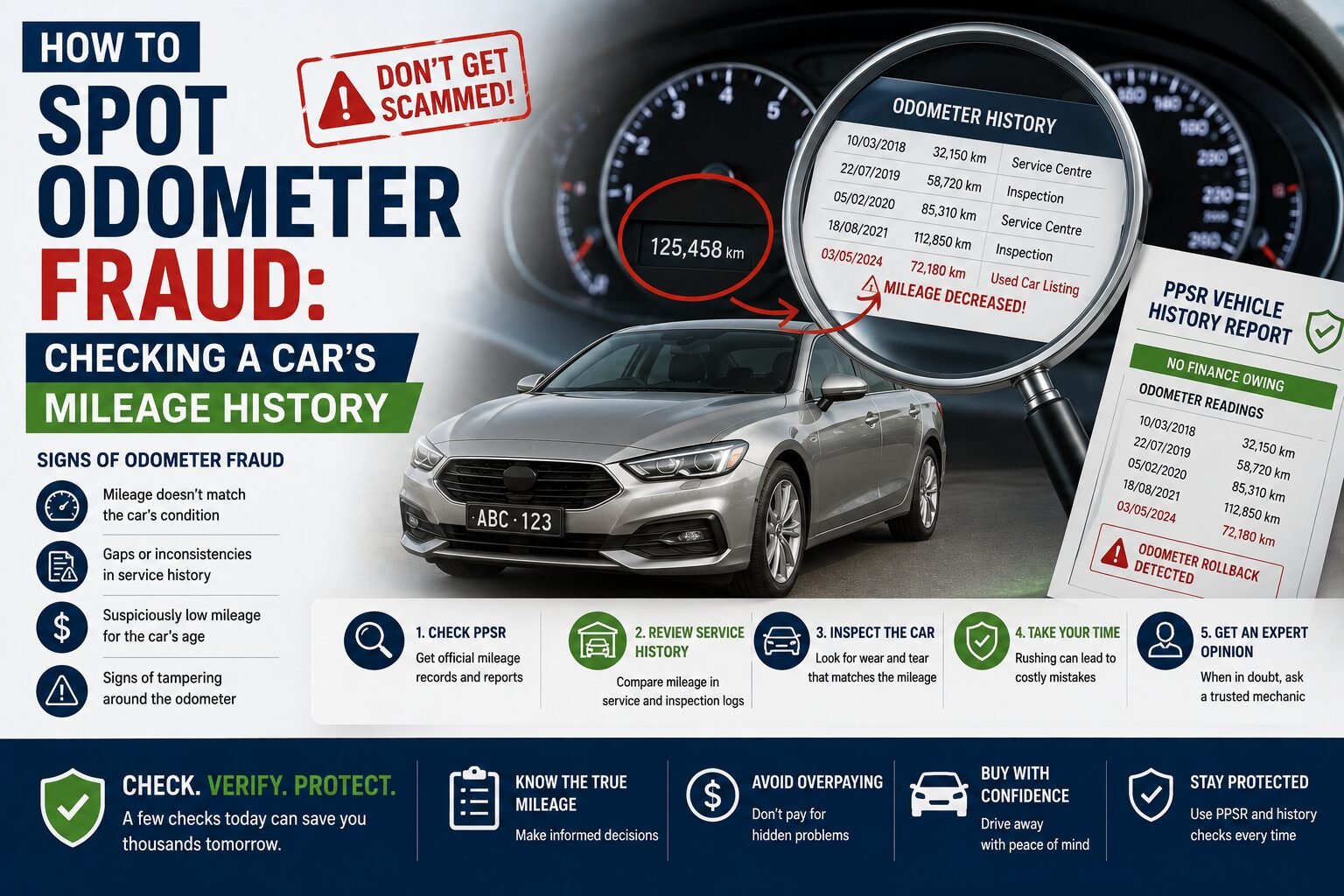
How to Spot Odometer Fraud: Checking a Car’s Mileage History
Odometer fraud, often called “clocking”, involves winding back a car’s displayed mileage to make it look newer and more valuable than it really is. It remains one of the more difficult forms of used car fraud to detect without doing some homework first.
What Is Odometer Fraud (Clocking)?
Clocking involves physically or digitally altering a car’s odometer reading downward. A car advertised with 80,000km might genuinely have travelled well over 150,000km, hiding wear that would normally reduce its price and reveal a higher risk of mechanical issues.
Signs of Odometer Tampering
- Worn pedals, steering wheel or driver’s seat that look inconsistent with low kilometres.
- Service stickers or logbook entries that don’t match the current reading.
- Digital odometer displays with misaligned fonts or flickering digits.
- A private seller who is vague about the car’s ownership or service history.
How to Verify Genuine Mileage
- Request the full service history and compare recorded odometer readings over time.
- Check old registration renewal notices, roadworthy certificates or insurance documents, which often record mileage at the time.
- Ask a mechanic to inspect wear patterns during a pre-purchase inspection.
Does a PPSR Check Show Odometer Readings?
A PPSR check does not record odometer history, but it does confirm the vehicle’s registered finance and write-off status, which is useful supporting evidence when assessing a seller’s honesty overall. Read our guide on how to read a PPSR certificate to understand exactly what is and isn’t included in a report.
Frequently Asked Questions
Is odometer fraud illegal in Australia?
Yes, deliberately altering an odometer to mislead a buyer is illegal under Australian consumer law and can result in significant penalties for the seller.
Can a mechanic detect clocking?
An experienced mechanic can often spot wear inconsistencies during an inspection, though a full service history remains the most reliable evidence.
What should I do if I discover odometer fraud after buying?
Contact your state consumer affairs body and consider seeking legal advice, as you may be entitled to a refund or compensation.
Conclusion
Cross-checking service records, registration history and physical wear is the best defence against odometer fraud. Pair this with a PPSR check for a fuller picture of the vehicle’s background before you commit to buying.